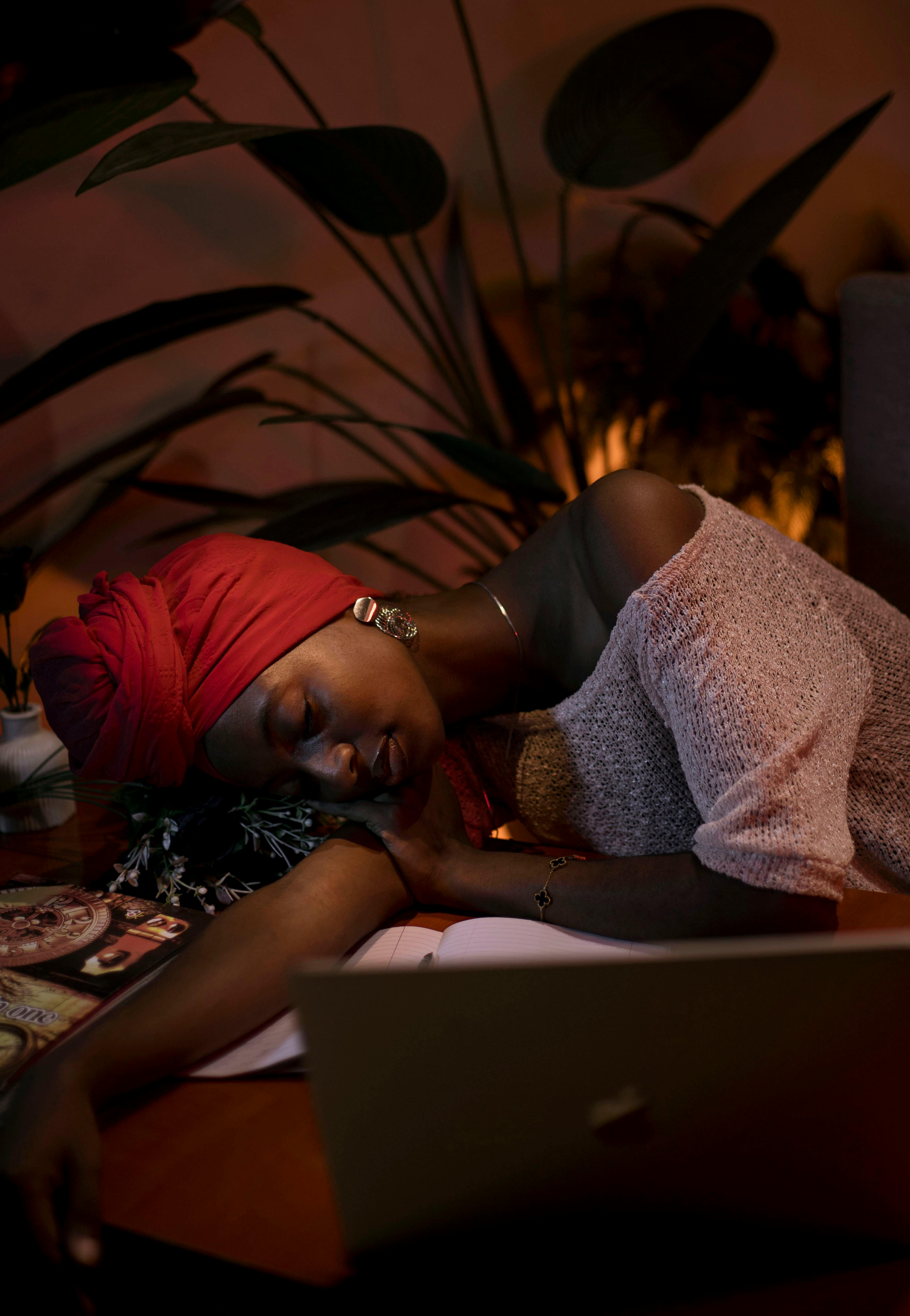
The Invisible Exhaustion of Being the ‘Strong’ Christian Woman
For Women Who Are Tired of Being Strong
The Invisible Exhaustion of Being
the ‘Strong’ Christian Woman
On carrying everyone else’s weight while no one notices yours
“Strong women are often just tired women who never stopped.”
Nobody crowned you the strong one. It just happened — the way certain things in church life always just happen. Someone needed to hold it together, and you were there. Someone needed a steady voice, and yours was the one that didn’t shake. Someone needed prayers said, meals organized, children watched, a friend talked down from the edge — and slowly, quietly, without any formal ceremony, the role became yours.
The strong one. The stable one. The one who has it together. The woman other women lean on. The one people call at 10pm because they know you’ll answer. The one who says “I’m fine” with such conviction that no one ever thinks to press further.
And the longer you carry it, the more invisible it becomes — not the weight itself, but the fact that you’re carrying it at all.
No one asks if the strong one is okay. They assume. That assumption has been exhausting you for years.
What nobody sees when they call you strong
There is a version of your life that other people see. She is capable. She shows up. She handles things. She prays out loud with authority, she speaks into other people’s pain with wisdom, she keeps the pieces of her life remarkably together — or at least it looks that way from where everyone else is standing.
And then there is the version that actually lives inside your body. The one who goes home and stares at the ceiling. The one who has been running on adrenaline and duty for so long she doesn’t even remember what rested feels like. The one who cried in the car once, on the way to the thing she showed up for anyway.
Do you recognize any of these?
- You hold space for everyone else’s emotions but have no idea where your own have gone.
- You are the person friends call in crisis — but you cannot name the last time you called someone when you were in one.
- You show up beautifully for others and then come home and fall completely apart.
- Weakness feels like a sin you cannot afford to commit.
- You are exhausted by people needing you, and then immediately feel guilty for feeling that.
- You have prayed for others more recently than you have wept for yourself.
- You are quietly resentful of the role — and ashamed of the resentment.
- The words I’m struggling feel almost impossible to say out loud.
If that is you: you are not strong. You are performing strength while something inside you quietly asks to be set down.
The most exhausting thing about being the strong one is that you cannot stop without the whole structure shifting — and you’re not sure anyone is ready for that.
How the church made strength your only option
We talk a great deal in Christian spaces about being a woman of strength and dignity. And there is beauty in that — a real, deep beauty. But somewhere along the way, a distortion crept in. Strength became the admission ticket. The thing you had to demonstrate to be taken seriously, to be trusted, to be valued.
And so women learned. They learned to lead through pain. To serve through depletion. To smile in the greeting line when the sermon made something inside them crack open. They learned that vulnerability was something to manage privately — perhaps before God, but certainly not before the congregation.
The result is a generation of women who are deeply, structurally isolated. Not because they have no community, but because the version of themselves that shows up to community is only allowed to occupy one role: the one who gives. The one who holds. The one who does not need.
You were never given permission to need. So you built a life around not needing — and called it faith. But it was survival. And there is a difference.
This is not a character flaw. It is a learned response to an environment that rewarded certain presentations of womanhood and gently penalized others. The woman who needed too much, expressed too much, asked for too much — she was a burden. The woman who gave without complaint — she was a blessing.
You chose to be a blessing. Every single time. And the cost of that choosing has been quietly compounding for years.
What if strength was never meant to be a permanent state of being?
Scripture does not present its strongest figures as people who never needed. It presents them as people who were honest about needing — and found something on the other side of that honesty.
Elijah, after his greatest ministry moment, sat under a tree and asked to die. He was not rebuked. He was fed, and told to sleep. The angel came back twice: the journey is too great for you. Not: you should be stronger. Not: where is your faith? But: you are human, and the road has been long, and you need to eat.
David wrote the Psalms — half of which are barely controlled collapse. “I am poured out like water.” “My bones are out of joint.” “Why have you forgotten me?” These are not the words of a man who had his strength together. They are the words of a man who brought his actual interior life before God and was not struck down for it.
The invitation, for you, might be this: to stop performing strength before God, too. He already knows what is behind it. He is not impressed by the show. He is waiting for the real conversation — the one that starts with I am so tired I don’t know who I am anymore.
That is not weakness. That is the most honest prayer you could pray. And honesty before God is the beginning of everything.
You are allowed to put some of it down. Not all at once — you may not even know how to do that yet. But you are allowed to begin to ask: what am I carrying that was never mine to hold? What did I pick up because no one else did, not because it was given to me?
You are allowed to stop being the strong one long enough to find out who you are when you’re not holding everyone else up.
That woman — the one underneath the strength — she has been waiting. She has been waiting a very long time for someone to notice she was there.
You do not have to earn the right to be held. You have been doing the holding. It is not weakness to finally let someone else reach toward you. It is long overdue grace.
Strong women are often just tired women who never stopped.
If that is you — if you have been running on duty and discipline and the quiet terror of what happens if you finally let go —
this is permission to stop.
Not forever. Not from everything. But from the performance of being okay when you are not. From the exhausting labor of making sure everyone else sees strength when what you actually feel is the floor coming up to meet you.
You are seen. Not the strong version. You.
You Were Never Meant to Carry This Alone